Why fit beats everything
A wig that is even half an inch off creates a cascade of problems: the front sits too high (visible lace line), the sides bow out (ear tabs lift), the cap shifts when you bend over. Buyers blame hair quality and return perfectly good units. Measure first; it costs nothing. If you are still deciding what to buy, How to Choose Your First Wig puts cap size in the full decision order.
The measurements
Use a soft measuring tape (or string plus a ruler). Take each measurement twice.
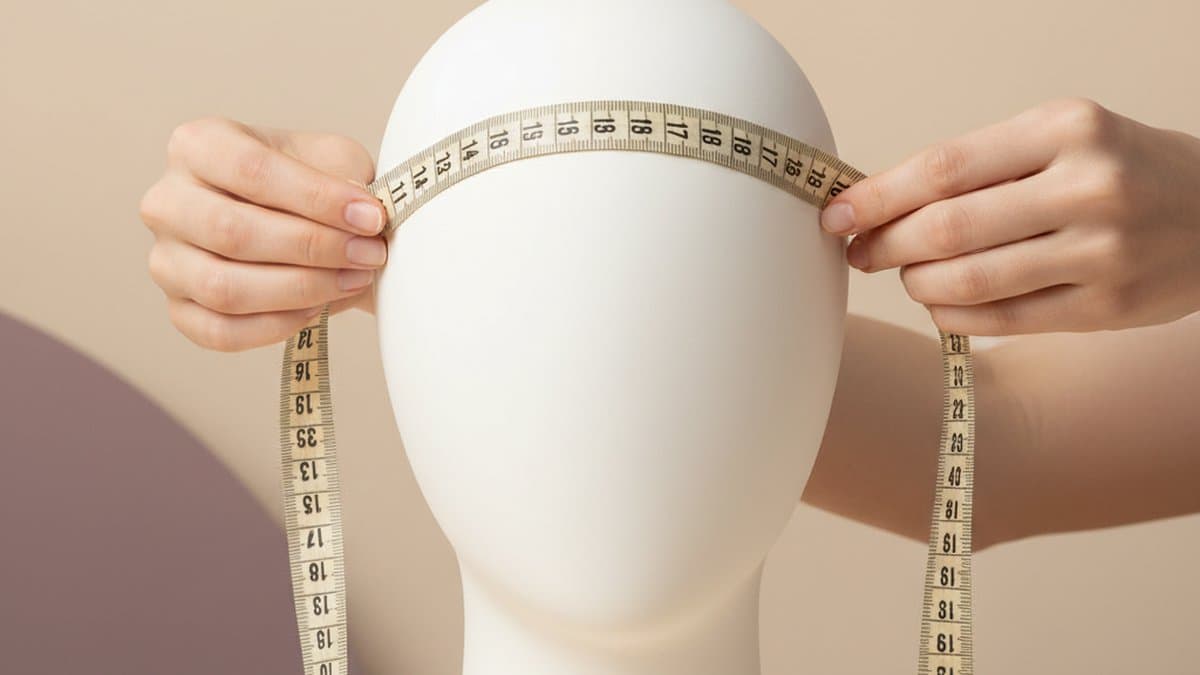
- Circumference: the one that matters most. Start at the front hairline (center of forehead), go around above the ears, and around the prominent bone at the back of your skull (occipital bone), back to the start. Keep the tape snug, not tight.
- Front to nape: front hairline, straight over the crown, down to the nape hairline.
- Ear to ear (over top): from the top of one ear, over the crown, to the top of the other.
- Ear to ear (across forehead): along the hairline from ear point to ear point.
- Temple to temple (around back): from one temple, around the back of the head, to the other temple.
- Nape width: the width of your nape hairline, ear-tab area to ear-tab area.
Most wig listings only require the circumference; the others matter for custom and medical fittings.
Standard size ranges
| Size | Circumference | Notes |
|---|---|---|
| Petite | 20.5 to 21.5 in | Also labeled "small" |
| Average | 21.5 to 22.5 in | The default for nearly all listings |
| Large | 22.5 to 23.5 in | Also labeled "big cap" |
What to do with your number
- Inside average: any standard cap works; use the adjustable straps to fine-tune.
- Below 21.5: filter for petite caps. Wearing an average cap means constant slipping and visible front lift.
- Above 22.5: filter for large caps. An average cap causes pressure headaches and rides up at the nape.
- Between sizes or unsure: choose the larger size. Straps and elastic can take up slack; a small cap cannot be stretched comfortably.
Fit checks after putting the wig on
- The front edge sits exactly at your natural hairline, not on your forehead, not behind it.
- Ear tabs sit evenly, flush against your temples.
- You can fit one finger under the cap at the nape; more means too loose.
- Shake your head gently and bend over: no shifting.
If a wig fails these checks despite correct measurements, the cap construction may not suit your head shape. A wig grip band solves many of these cases for a few dollars. See Glueless Wig Installation for the full secure-fit routine.
Sources
- r/wigs fitting discussions and cap size reports across vendors.
- American Cancer Society: Wigs for Hair Loss on fitting during treatment.