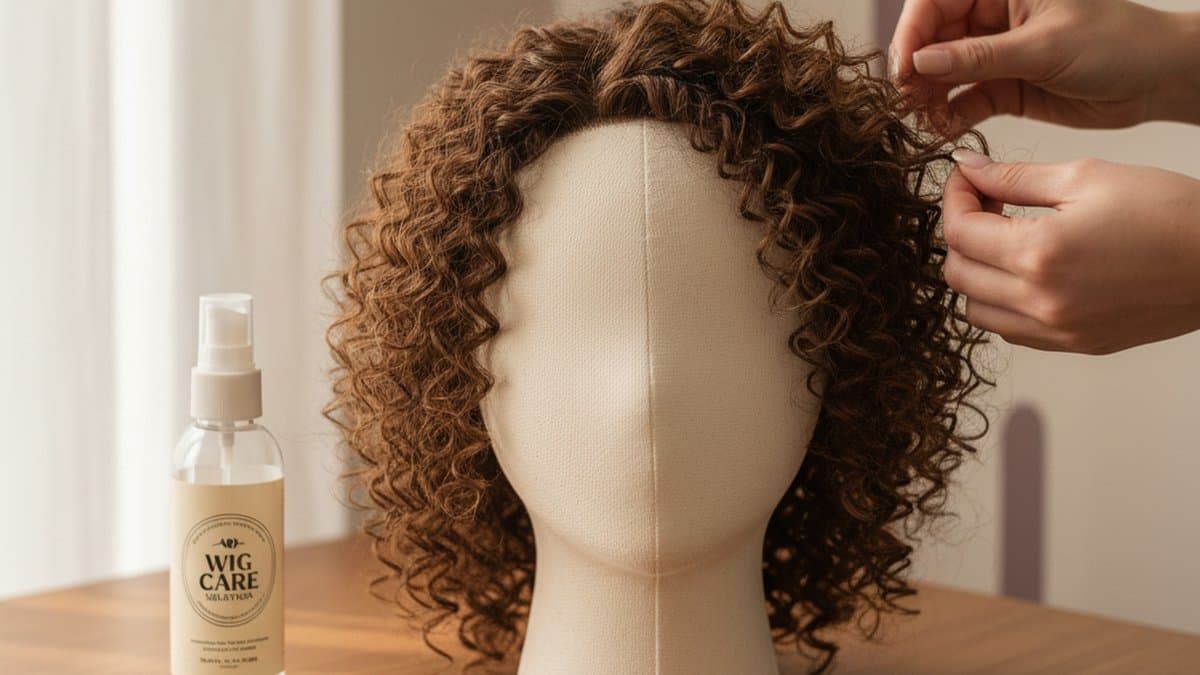
The washing routine
This routine applies to fashion and medical synthetic wigs alike; if your unit is a character build, also read Cosplay & Character Wigs for styling-specific care. Background on the fiber itself is in Synthetic Wigs.
Frequency: every 6 to 8 wears for occasional wear; every 4 to 6 wears for daily wear. Over-washing fades color and softens the pre-set style faster than under-washing harms anything.
Steps:
- Fill a basin with cool water. Hot water relaxes the factory set, and this is the most common synthetic wig killer.
- Add a capful of synthetic wig shampoo (or a gentle sulfate-free shampoo in a pinch). Swirl to mix.
- Submerge the wig and soak 5 minutes. Swish gently. Do not rub, twist or scrub. Friction is what frizzes fiber.
- Drain, refill with cool water, and rinse until the water runs clear.
- Apply synthetic wig conditioner mid-lengths to ends only, leave 2 to 3 minutes, rinse.
- Pat excess water with a towel (press, never wring), then hang on a wig stand to air-dry. No blow dryer.
Detangling without damage
- Straight and body-wave fiber: wide-tooth comb or wig brush, working from ends upward in sections. Hold the weft above the section you comb so you are not pulling knots against the cap.
- Curly fiber, dry: fingers or wide-tooth comb only, and only when damp with a detangler spray. Brushing dry curls turns them into frizz instantly.
- Stubborn knots: apply detangler, wait two minutes, and work them apart with your fingers before combing. Cutting out a small knot is better than ripping through it.
The frizz truth
Frizz on synthetic fiber is mechanical damage: cuticle-like surface roughness from friction against collars, bag straps, pillows and brushing. No spray un-frizzes damaged fiber. Products marketed as "frizz removers" mostly add coating that temporarily smooths the surface.
Prevention that actually works:
- Satin or silk storage: a wig stand in a satin bag, or a satin pillowcase if you sleep in the wig.
- Rotate wigs so no single unit takes daily friction.
- Keep hair off shoulders when you can; shoulder-length ends rub constantly.
- Trim the routine: for shoulder-length daily-wear units, expect nape and shoulder frizz after 2 to 3 months and plan replacement or rotation.
For a slightly frizzed unit you still love, a light pass with fabric softener diluted 1:10 in water, sprayed on and air-dried, is the community's most-reported temporary fix. It coats, it does not repair.
Heat rules
- Standard synthetic: no heat tools, ever. Keep away from ovens, candles and high-heat hairdryers.
- Heat-friendly synthetic: check the listing's temperature rating (commonly 160°C to 180°C) and stay under it. Use low settings; test on a weft under the ear first.
- Steam is safer than dry heat for reshaping both types, and is the cosplay community's standard tool for spikes and curls.
Storage
On a wig stand or mannequin head, away from direct sunlight (UV fades color), in a breathable bag. Never store a synthetic wig crushed in a drawer. Creases in fiber are often permanent.
Sources
- Modacrylic (Wikipedia) on synthetic fiber care limits, including heat sensitivity.
- r/wigs washing and frizz-management routines from long-term wearers.